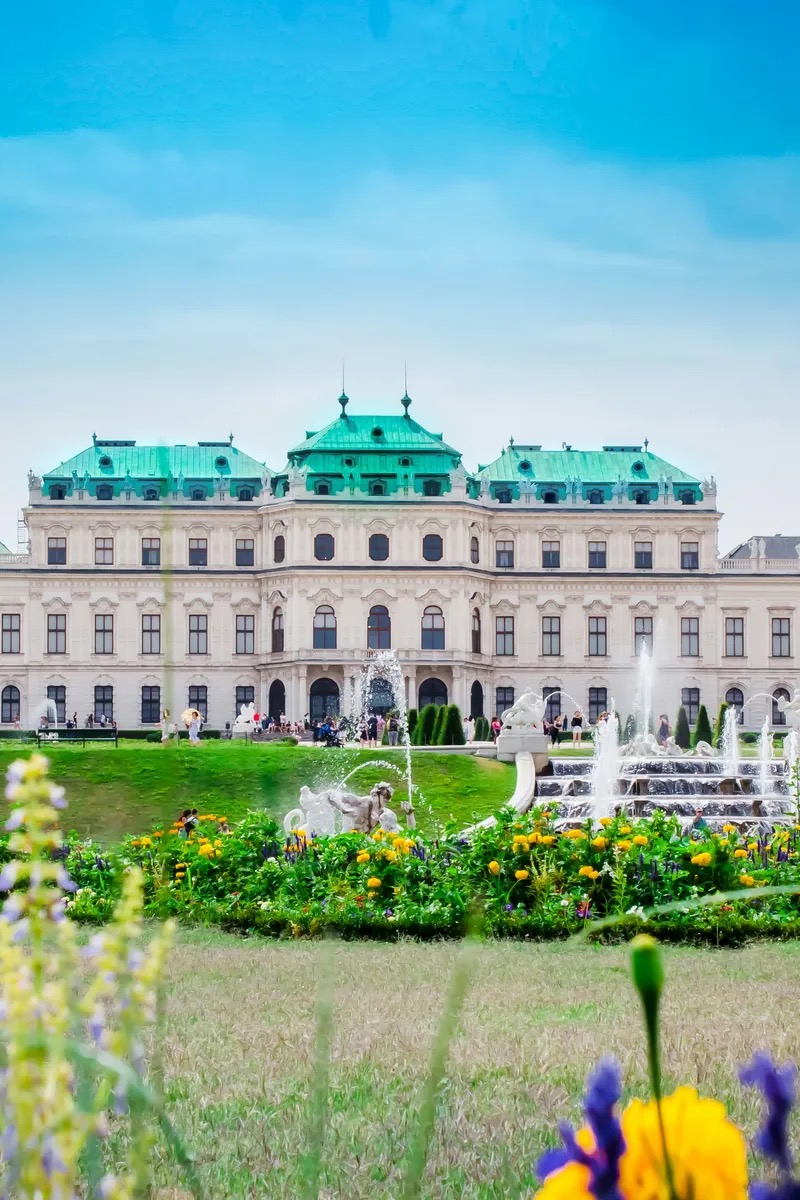
Schönbrunn is the palace where the Habsburgs spent their summers — and, for the better part of three centuries, ran an empire. Its 1,441 rooms spread along a sweep of yellow Baroque facade, looking out over formal gardens that climb to the Gloriette on the hill. It is the most visited sight in Austria, and one of the great surviving courts of imperial Europe.
The palace took its golden form under Empress Maria Theresa in the mid-eighteenth century, who made it the family home and the stage of her court. It was here that a six-year-old Mozart played for her in the Hall of Mirrors; here that the Congress of Vienna danced; and here that Franz Joseph — the emperor of the long sunset of the monarchy — was born in 1830 and died in 1916, his apartments and those of his wife Elisabeth, the beloved 'Sisi', preserved much as they left them.
The Grand Tour is the fullest way to see it: forty rooms along the piano nobile, from the private apartments of Franz Joseph and Sisi through the dazzling state rooms at the heart of the palace — the Great Gallery, the Millions Room, the lacquered Vieux-Laque Room — and the private chambers of Maria Theresa herself. An immersive history presentation and an audio guide set the scene as you go.
Entry to the palace is by a reserved time slot, so the rooms are never a crush and you walk in past the ticket-desk queue at your chosen moment. Schönbrunn Palace and its gardens were inscribed on the UNESCO World Heritage List in 1996 as an outstanding Baroque ensemble and a symbol of Habsburg power.